


A journey of self-discovery and surreal surprises.
Concierge is a suspense/adventure/puzzle/variety PC game developed by KODINO Artes. It blends point-and-click mechanics with many other genres and mediatic influences to create an unpredictable experience focused on non-linear exploration, diverse gameplay and unconventional storytelling. What you're about to encounter is as otherworldly as it is close to heart.
This project is partly funded by our publisher Digital Tribe Games, and the city govt. of São Paulo.
Ethos
The soul of Concierge was born out of a deep-seated fear of mediocrity, and an unshakable, quasi-ontological sense of guilt.
Any true artist of unexceptional luck desperate to yell (or so much as whimper) out their essence into the world is, in some way, terrified of the following predicament: there is someone out there (probably multiple people) that can do anything they'd aspire to better (probably faster, too) than themselves. Finding the will to continue existing under the weight of meaninglessness is not easy.
The ever-looming turning point where mounting failures cease to be stepping stones, instead becoming piling signs of insufficiency you've foolishly chosen to keep ignoring... is it possible to live a creative life of joy, self-love and self-respect alongside this horror?
Furthermore, what room is there left for an other within a heart so painfully set on such gaseous, egocentric goals as self-realization?

Core Design
Concierge is built upon three main design pillars which compliment each other and make its play experience unique.
Primary Pillar: Maximalist Mystery.
Most games (and movies) feature narrative mysteries which are unveiled during linear story beats. Some use mystery as a thematic backdrop for their mechanics (ie detective games). Not many use mystery as a driving force behind the gameplay experience - like, for example, Outer Wilds, wherein players explore an open world full of interconnected stories and contextual/observational puzzles. Concierge is one such game, but instead of an expansive planetary system, it contains all its enigmas in a densely-packed location.
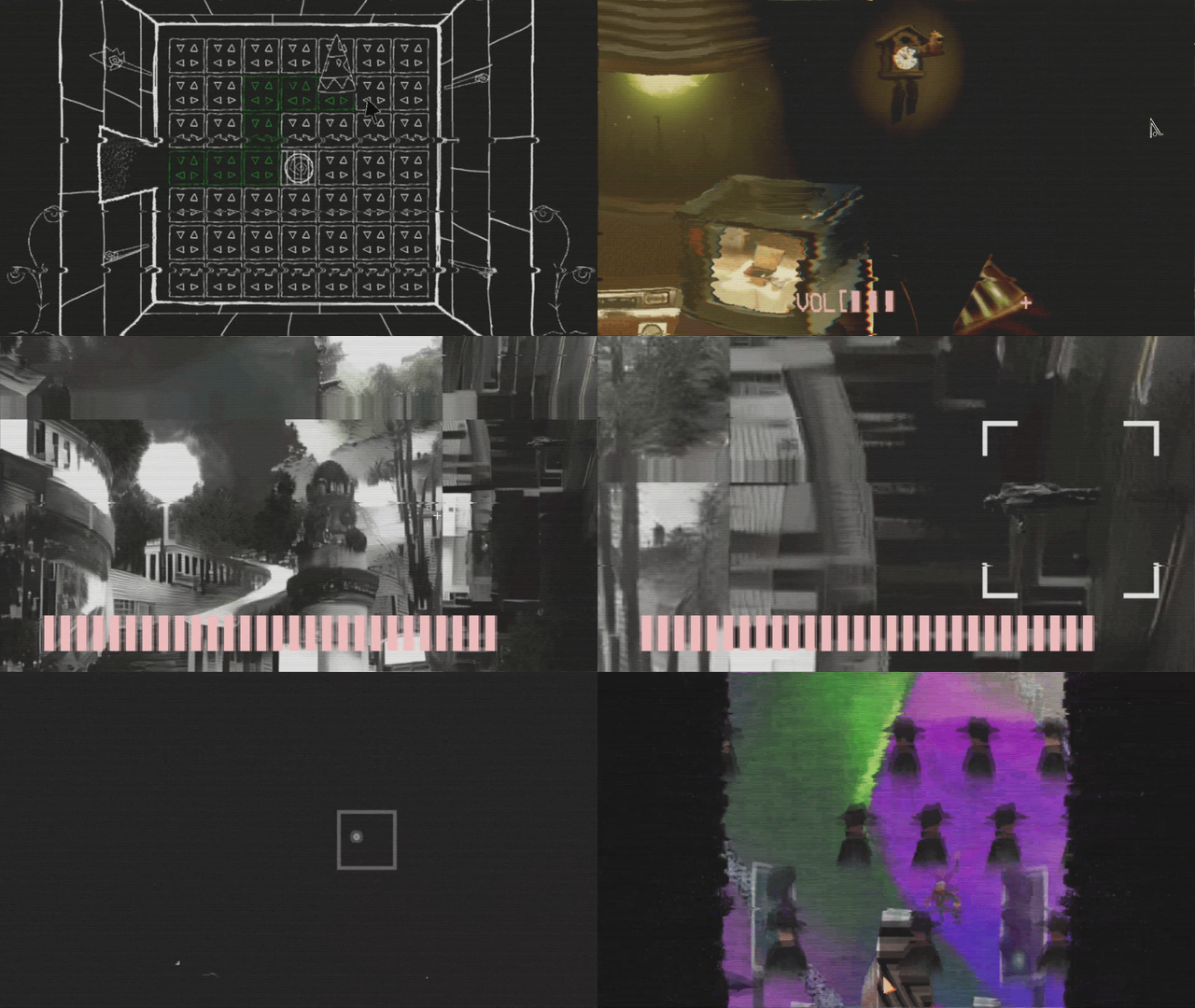
There are no quest markers, and no set story beats apart from a beggining and an ending. There is only one overarching objective: find and complete all 6 "VHS levels", in any order. As the player explores a decrepit inn, they may unravel as much of the narrative and its characters' self-contained stories as they can or care to. Even encounters with the concierge are mostly optional and cannot be counted upon. In each corner of this space lies an optional puzzle with a tangential lore reward, resembling an "easter egg hunt".
That's not all - in the more linear VHS levels, mystery takes on a different shape as the setting and gameplay loop change drastically. These sections are not bound by the rules of the inn, so the player has to figure out what the new challenges and themes are - often without textual guidance. Design centered on player discovery guides the gameplay experience at every layer, as well as...
Secondary Pillar: Adaptation.
In each VHS level, the simple mouse controls gain new functions related to the context at hand. After understanding them, mastering each level requires an entirely different skillset - from platformer, to The Witness-style challenges to hidden object segments. Even at the inn, each puzzle requires the player to consider their environment in a new way. Everyone will be forced to learn a skill they are not familiar with, and to constantly think outside the box. The game is designed to lift players off their comfort zones through its horror atmosphere, certainly, but also through its mechanics and overall unpredictability. It's not a survival game.
Tertiary Pillar: It's Personal.
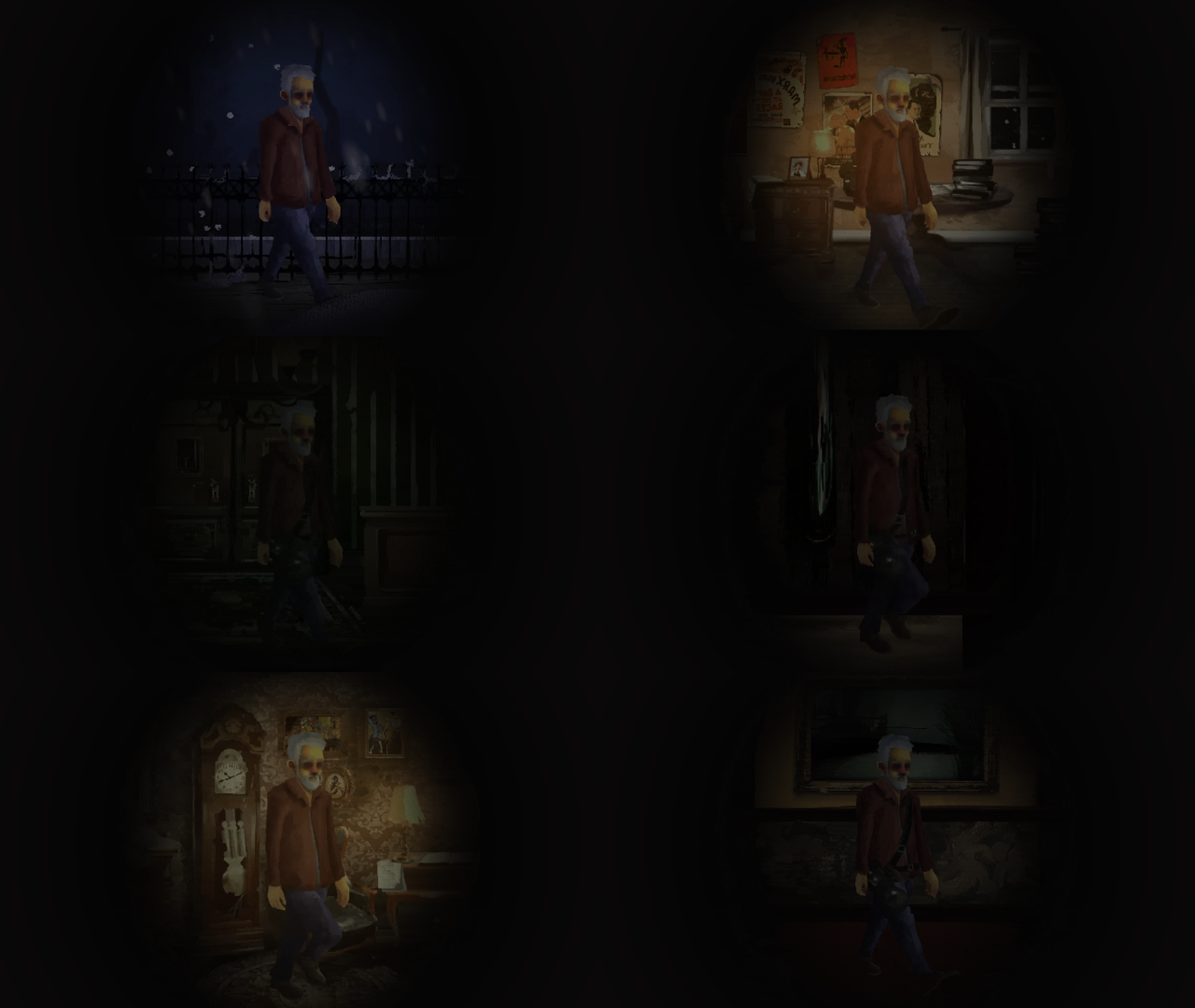
Concierge's plot is diffuse and its progression is non-linear. Instead of relying on cliffhangers or gripping character development, its narrative content is largely meant to interface with the cultural notions and life experiences of the person behind the screen. There is indeed a tale about a man that wakes up at a creepy inn and the characters that surround his life, but the game conveys its lore and themes in a way so as to bring attention to and comment on the real world's Zeitgeist. To that end, it is agressively derivative and referential. Its presentation seeks to bring out introspection (and hopefully catharsis), instead of focusing on vicarious drama. It's a personal journey - each individual should reach different conclusions and draw different emotions from the facts of its characters' lives, as well as from the abstract aesthetics and gameplay that make this story's tone unique. Concierge is not a traditional adventure about escaping monsters, nor does its immersion rely on making you forget you're playing a videogame - after all, it is about those who would engage with and take from its world just as much as it is about itself.

Structure
Concierge is a non-linear atmospheric adventure with lots of tricks up its sleeve. Its structure is divided in two main parts: the inn and the VHS worlds.

Concierge rouses and rewards curiosity. Figuring out the narrative and the unique ways of interacting with the world is a big part of the experience - useful information, unique puzzles and surprising events fill every nook and cranny of our small, backtracking-proof, pixel hunting-immunized hub world. There's always something interesting to find, no matter where you look.
The focus is on immersion and exploration. The HUD is minimal, and there is little mandatory text throughout the whole game. Lots of lore content is optional for players who feel invested in it, being given out as reward for completing optional puzzles hidden all throughout the inn.

The inn segment acts as the main hub of non-linear exploration and discovery. Using simplified point & click mechanics, the player will be able to gather clues about the game's story, collect items as well as solve puzzles using a paranormal camera. Once they find one of the 6 characters, they will be transported to a different gameplay segment (VHS), each with specific rules, controls, aesthetics and objectives.

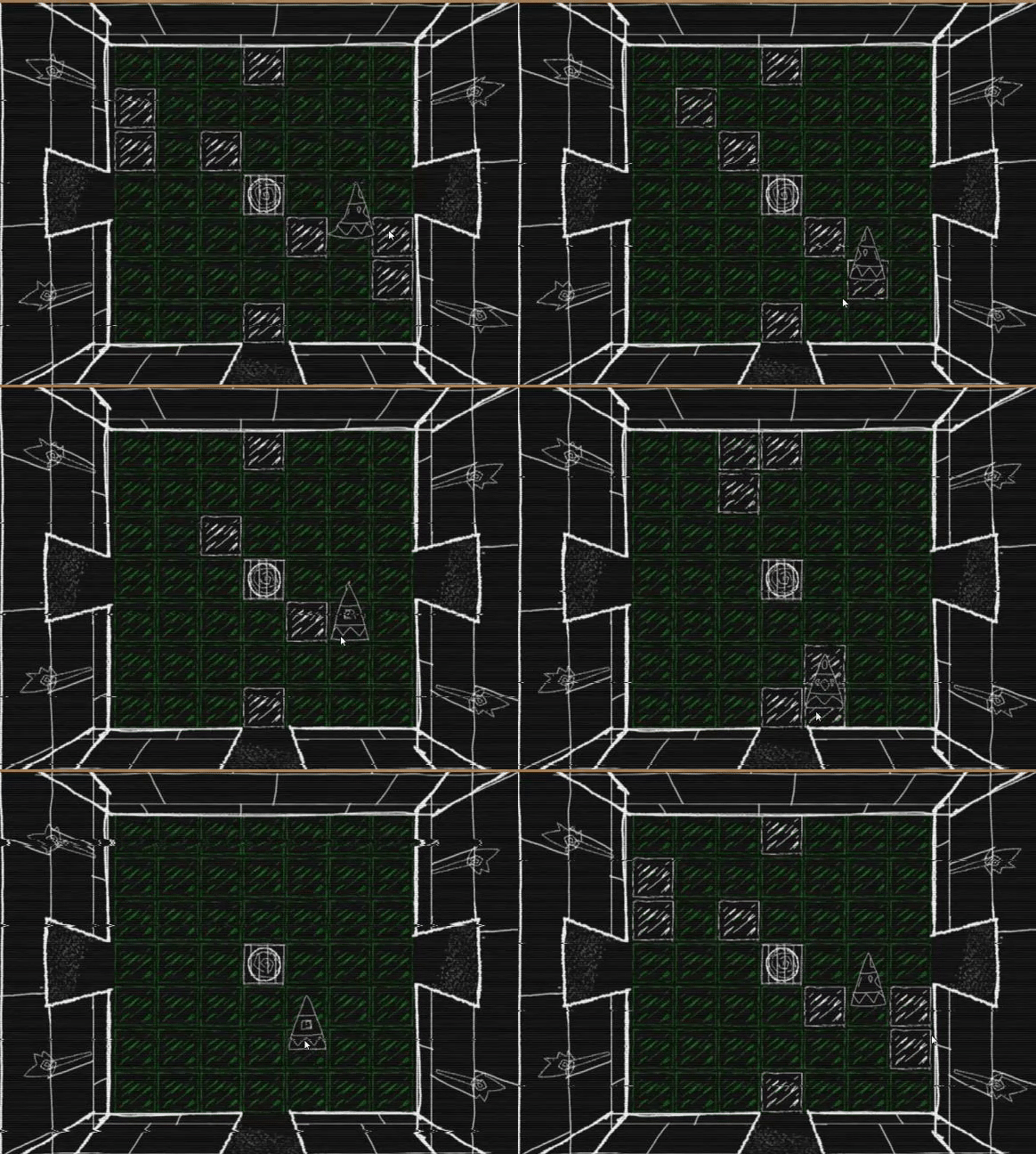
Gameplay is kept fresh at all times. There is a great variety of peculiar puzzles at the inn, and more importantly, each of the VHS worlds are wildly different in every way. In them, the player will be asked to play platforming levels, answer questions about morality, scour surrealist pictures for signs of life and solve even more puzzles with a completely distinct setting and ruleset. Each subgame is an entirely new experience that will require players to adapt and understand new concepts, all handled intuitively with no handholding or pace-breaking game overs.
Concierge's suspense factor relies on its unpredictable presentation and eerily eclectic aesthetics, rather than on cheap jumpscares.
Cultural references, meta callbacks and sudden tone shifts are plentiful, coloring this maximalist-yet-intimate story with plenty of memorable and iconic moments.

Writing
Creating a narrative throughline for a game in which the player determines the direction of progress requires a unique approach. Cliffhangers are mostly out of the question - in order to be truly captivating and surprising, the writing has to transcend the game's magic circle and infiltrate the real world in which the player resides - slowly and carefully.

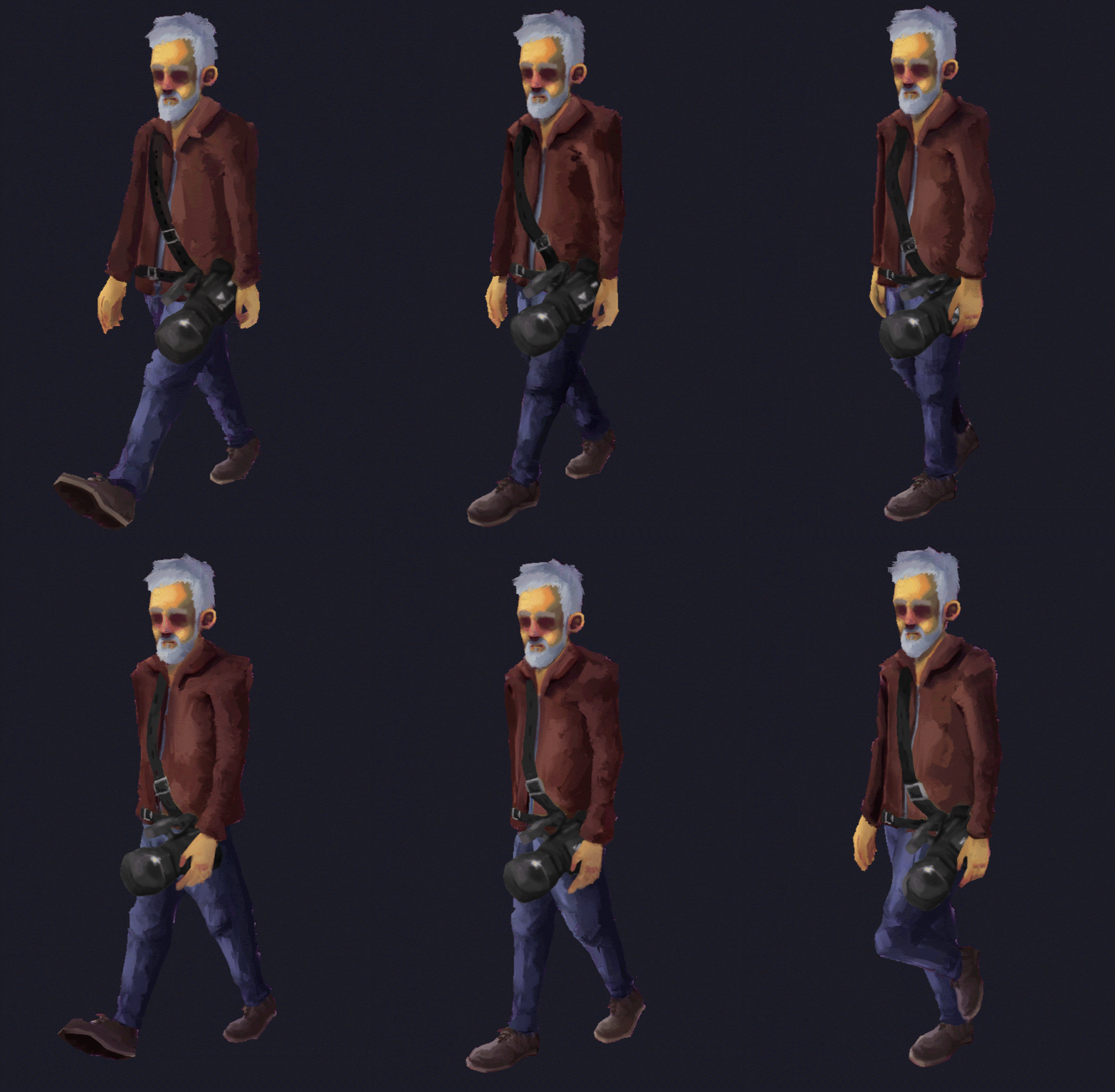
Only one character talks throughout the entire playthrough - the mysterious concierge. His appearances are always sudden. He is not promptly given a name, motive or reason to exist - he just has some interesting, at times philosophical things to say! Discovering the true extent of the player character's identity and their relationship to him is part of the game's enjoyment. Character development is tied to the player's innate curiosity/desire to freely explore and put together the pieces of this "narrative puzzle".
This motif is also expanded to the other characters that only talk during their cutscenes (after VHS levels), otherwise only knowable through collectible puzzle rewards consisting in lore text. None of them feature in particular story beats - the interest in each of their stories is self-contained.
Astute experients will be able to unveil some of the narrative's overall themes even before the revealing ending, by drawing intuitive connections both to the in-game avatars and their real life counterparts.
The freeform nature of this surrealist universe's writing emphasizes the moment-to-moment focus of the experience. The protagonist is silent. The game's pace is gated by player successes, not story. The soft horror ambience may suggest some cryptic conflict, but there are no baddies to run away from, nothing to urge desperate progression. The gradual transition between cautious, restrained investigation and curious bewilderment is part of the intended charm. Making the most out of the world's narrative is in the hands of the player, and the depth of its themes need only be explored as far as preferred.

Level Design
The abstract aesthetics of the VHS worlds provide an opening to reinvent gameplay and tutorials more freely. It's also a great excuse to avoid engaging with pesky affairs such as "ludonarrative dissonance" and "suspension of disbelief", seeing as there are heaps of unconventional (but uncomplicated) mechanics being crammed into a single videogame that's about a great (subjective) deal of things. Woah, long sentence. Sorry.
Interesting artistic transformations will often happen during and reinforcing gameplay, not being simply relegated to cutscenes.
Each new stage tackles a vastly different niche-genre than the last, requiring the player to first grasp their surroundings and understand what the rules of this new subgame are, then figure out a strategy, and finally master the level's flow.
Figuring out the simple control schemes and inhabiting each level takes no more than two mouse buttons and exactly zero text prompts, for both the inn and VHS sections. The game asks of the player a varied skillset and does challenge them; some players will struggle in one area or another which is not their strong suit, but no particular section is too difficult to be conquered by just about any perseverant gamer.

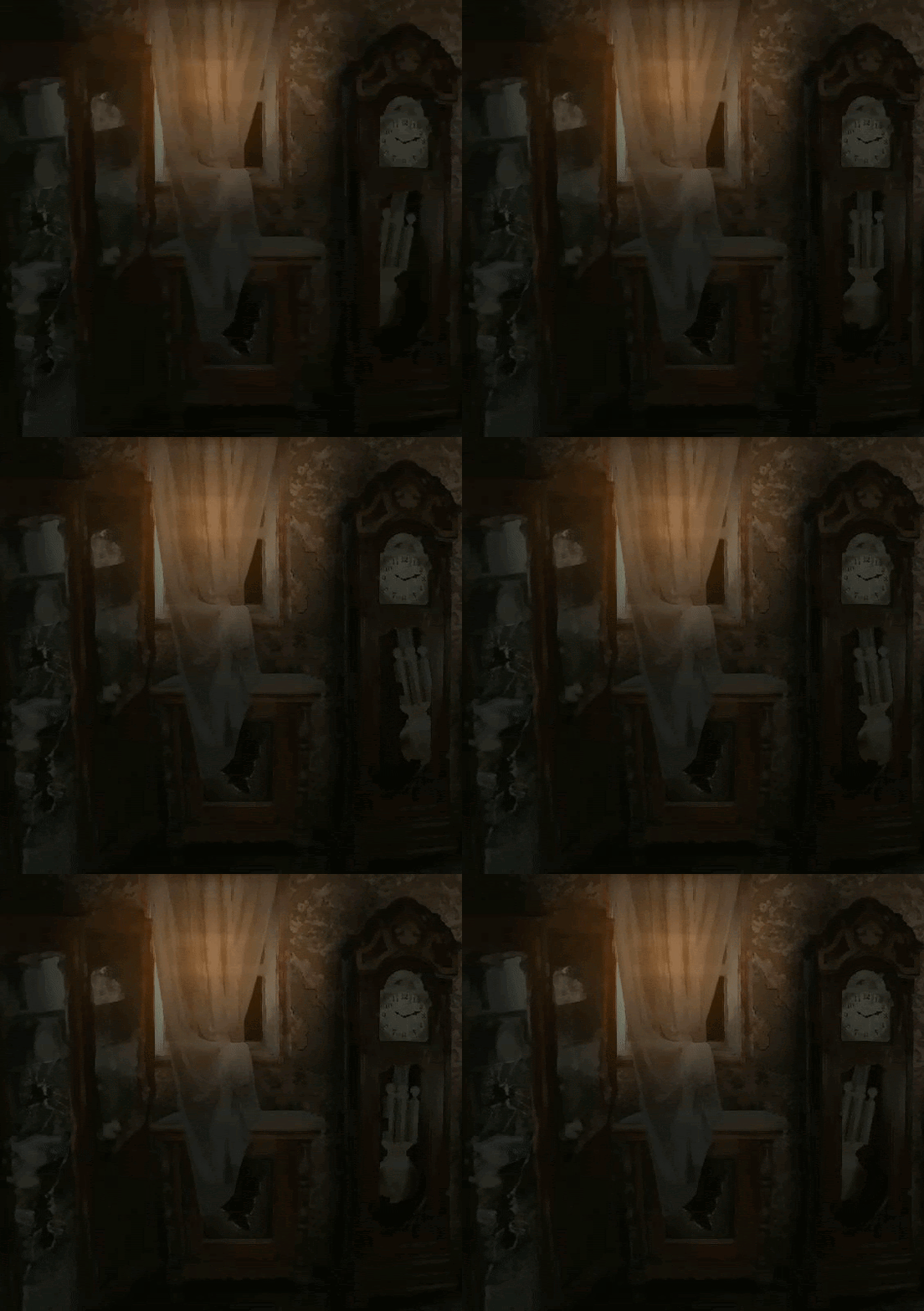
With the hotel's camcorder and item-based puzzles, the intensely disparate VHS level challenges and the overall narrative conundrum, the crux of conveyance is the same: making intuitive curiosity-driven gameplay work with "smart" bread crumbs. VHS levels are more controlled and visually specific environments, lending themselves to this idea. At the more detailed and spacious inn, riddles are spread all over the place, but are mostly optional. As for the narrative, the main aspects of it are covered for all players who finish the game, and the optional content expands it and its themes outwardly/poetically/philosophically.
During development, countering red herrings has been a constant mission so as to make the game flow smoothly. Just in case, there's a diegetic hint system for the inn.
Basically, Concierge's level design makes sure fun, open-endedness and weirdness need not compromise.

Music
An assortment of short tracks to showcase range. The many present interpretations of surrealism justify a great variety of composition styles.

The soundtrack is extremely adaptive, being an important piece for establishing the game's atmosphere. It is highly diegetic in the hotel setting, playing old-timey (public domain) valses with haunting reverb and analog imperfections. Elsewhere, it is totally dynamic, experimental and unique to each section, adding instruments and chaos as the player progresses.

Bitcrush
Camera
Enter VHS
Knife
Paper bag/Stove/Mason jar foley
Scotch
Sound Effects
In the hotel, the soundscape mostly sets the spooky mood through realistic noises like footsteps on wood, rattling window panes, grinding elevator gates, snowstorms, floorboards creaking etc. Clicking around will also produce sounds (think Hearthstone).
On the other hand, each VHS level heads in a totally unique direction from the others. One maintains more grounded effects, another features mundane object foley emulating abstract things, another has bitcrushed synths, some employ creepy whispers and voices, so on and so forth.
Here are some of the more elaborate ones.
Meaty mutilation
Tape stingers
Suspense
Editing
Assembling Concierge's psychedelic selection of trailers was a balancing act: for a game that relies so heavily on intrigue and surprises, how much do we give away of the gameplay and premise and what do we hide among the cryptic quick cuts and flashes instead?
Gamers like knowing exactly what they're getting, so it may prove tricky to convey a game's flow and appeal without spoiling the mysterious atmosphere. The release trailer (on the right), for instance, is more cinematic than substantial, but you'll find a different cocktail of teased elements in the other trailers.
The in-game cutscenes were also a very eclectic bunch of cinematic experiences. From hand-painted animation to motion graphics to real life acted out scenes, each style required a different approach to pacing, cutting and soundtracking.
On the left you can watch one of the "cab" scenes, in which dialogue and voice acting is heavily featured. In it, we have a foreground (car) illustrated over 3D models, and a background (outside) consisting in actual dash cam footage. The "rearview mirror" trick help set up which character was speaking, since this cutscene was reutilised.

Concierge was developed in GameMaker Studio 2 by me, featuring art and animation by my good partner Lucas Gerosa. Please consider picking it up! Thx :)

Check it out below: